Overtime can be a necessary part of keeping operations running. It can help your organisation respond to changing demand, maintain continuity or cover an unexpected staffing gap.
But when overtime keeps occurring in the same roles, shifts, teams or locations, it may point to a deeper issue with staffing, skills, scheduling or workforce visibility.
Could your organisation be resolving the immediate problem without identifying what is driving it?
When overtime becomes a recurring response
An extra shift or a few additional hours may be the right response to a short-term staffing problem. But if the same roles, teams or locations regularly depend on overtime, it is worth asking what lies behind the pattern.
Perhaps there are not enough qualified employees available. Absence may be affecting the same shifts, or workforce schedules may not reflect operational demand.
Managers can keep production moving by approving overtime. But if every staffing gap is handled as a one-off event, the underlying workforce issue may remain hidden.
The information exists, but managers may not be able to use it
When an employee is absent or demand changes unexpectedly, managers may have little time to fill the gap. They need to know who is available, who has the required skills and whether assigning additional work is likely to trigger overtime.
In many organisations, that information already exists. The difficulty is bringing together schedules, attendance, qualifications and hours worked quickly enough to support the decision.
If managers have to check several systems, consult spreadsheets or rely on local knowledge, the most obvious replacement may not be the most suitable one. The shift may be covered, but the organisation may only discover the cost or payroll impact later.
Payroll exceptions can expose operational problems
By the time overtime appears in payroll, the decision that created it has already been made. The cause may have emerged much earlier, when a manager filled an absence, extended a shift or relied on one of the few employees qualified to perform the work.
The same applies to recurring payroll exceptions. Repeated corrections for changed shifts, work performed outside an employee’s usual role or unexpected additional hours may point to a wider issue with scheduling, skills coverage or time recording.
Correcting each exception helps resolve the immediate payroll requirement. Looking for patterns can help reveal whether the organisation is repeatedly managing the symptom rather than addressing its operational source.
From overtime records to workforce insight
A payroll report can show how much overtime was worked and where the cost occurred. Looking across scheduling, attendance and skills information can help explain why it happened.
Patterns may reveal that particular shifts depend on additional hours, that qualified coverage is limited or that the same payroll exceptions keep returning. This turns overtime from an isolated cost into a useful signal about workforce capacity and planning.
The challenge is knowing whether managers have access to the right information before work is assigned. That is where assessing current workforce visibility can provide a useful starting point.
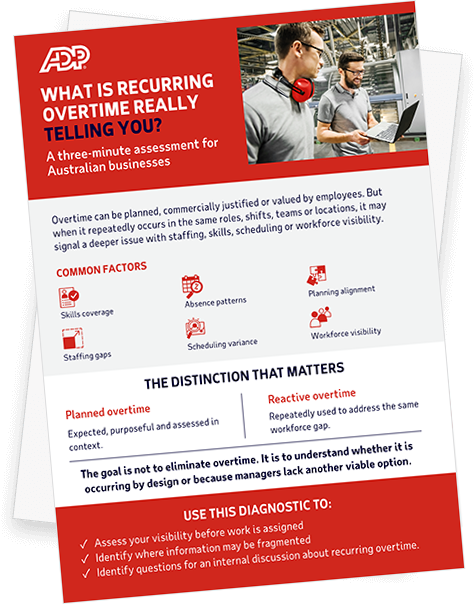
Assess your overtime visibility
Do your managers have the workforce information they need before assigning additional work? Can they identify where repeated overtime or payroll exceptions may point to a broader issue?
The Recurring overtime diagnostic is a three-minute assessment for Australian businesses. It helps you examine workforce visibility across staffing, skills, scheduling, labour costs and payroll processes, then identify questions for further internal discussion.
Download the recurring overtime diagnostic to see where information may be fragmented and where greater visibility could help managers act earlier.