insight
Employee onboarding process & checklist
Want help maximising employee productivity?
Are you looking for effective ways to boost productivity through employee onboarding? You’re in the right place! Recent data from the Australian HR Institute’s (AHRI) Resourcing and Talent Planning Report 2024 reveals that around 25% of new hires don’t even show up on their first day, and nearly 40% leave within just three months. These figures really highlight the importance of an effective employee onboarding process for enhancing retention and engagement.
Table of Contents
What is Job Onboarding?
So, what exactly is job onboarding? It’s a structured approach to welcoming and integrating new employees into your organization. Unlike a one-off induction or orientation, HR onboarding is an ongoing journey starting before the new hire’s first day and continuing through their initial months. The goal is not just to familiarize them with their job duties, but also to help them feel connected and understand their role within the company culture. Great onboarding of a new employee sets them up for long-term success!
Why is Onboarding New Employees Important?
Effective onboarding of new staff has a significant impact on both employees and employers. Here are four compelling reasons why HR professionals should prioritize recruitment and onboarding:
1. Retention: New hires with positive employee onboarding experience are much more likely to stay. Research from AHRI shows that 70% of Australian employees with structured staff onboarding stay with their employer for at least three years.
2. Productivity: The sooner new hires grasp their roles, the quicker they can dive in and contribute. A study by the Australian Institute of Management found that structured employee onboarding can boost productivity by up to 60%.
3. Engagement: A solid HR onboarding experience fosters employee engagement and loyalty. According to the Australian Workplace Engagement Study, organizations with highly engaged employees are 20% more profitable and experience lower absenteeism rates.
4. Compliance: Effective human resources onboarding ensures employees understand workplace health and safety (WHS) requirements and company policies, reducing the risk of costly compliance breaches.
The Employee Onboarding Process
Even though onboarding is critical, many businesses find staff onboarding challenging. But don’t worry! You can break it down into three phases to make it more manageable:
Before Their First Day:
Get organized and show your excitement about the new hire's arrival! This phase helps ease first-day nerves and creates a sense of belonging right from the start. Focus on these items on your staff onboarding checklist:
- Sending the employment contract and completing the Fair Work Information Statement.
- Setting up payroll, superannuation enrollment (as per Australian laws), and IT access.
- Preparing necessary equipment and sharing useful first-day information, like where to park.
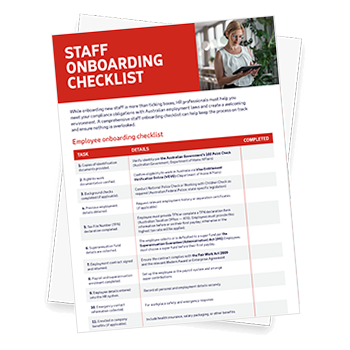
Stay on top of new employee onboarding
First Day and First Week:
These initial days shape how the new employee views your organization. It’s all about making them feel welcome and providing them with the tools they need without overwhelming them. Focus on:
- Giving a warm welcome and introducing them to their team.
- Providing a clear overview of their role, responsibilities, and expectations.
- Covering important topics, such as WHS procedures and key company policies.
First Three Months:
This is a crucial period for learning and adjustment. New employees will be assessing whether your organization is a good fit, so ongoing support is vital. Focus on:
- Setting clear performance objectives and conducting regular progress reviews.
- Offering continuous training and professional development opportunities.
- Encouraging participation in projects, meetings, and fun team-building activities.
Frequently asked questions about employee onboarding
What is the difference between onboarding and induction?
Onboarding is a comprehensive, ongoing process that starts before day one and continues for several months, focusing on integrating new employees into the company culture and their role. Induction is typically a one-off event or session that introduces new hires to basic workplace information.
Why is onboarding important for employee retention in Australia?
Effective onboarding helps new employees feel welcomed, supported, and clear about their role, which significantly reduces early turnover. Australian research shows that employees with good onboarding experiences are much more likely to stay with their employer long-term.
What legal requirements must Australian employers meet during onboarding?
Employers must provide the Fair Work Information Statement, ensure compliance with workplace health and safety (WHS) laws, set up superannuation contributions, and adhere to anti-discrimination and workplace bullying policies.
How long should the onboarding process last?
Onboarding is ideally a phased process lasting at least the first three months of employment, with ongoing support, training, and regular check-ins to ensure the employee is settling in well.
How can technology improve the onboarding process?
HR software can automate administrative tasks like payroll setup, document management, and training scheduling, making onboarding more efficient and consistent. Outsourcing HR services is another option for businesses seeking expert support.
References:
1 - Australian HR Institute (AHRI). (2024). Resourcing and Talent Planning Report. https://www.ahri.com.au
2 - Australian HR Institute (AHRI). (2023). Employee Retention Insights.
3 - Australian Institute of Management. (2023). Onboarding and Productivity Report.
4 - Australian Workplace Engagement Study. (2023). The Impact of Employee Engagement on Business Performance.
5 - Fair Work Ombudsman. (2024). Fair Work Information Statement. https://www.fairwork.gov.au